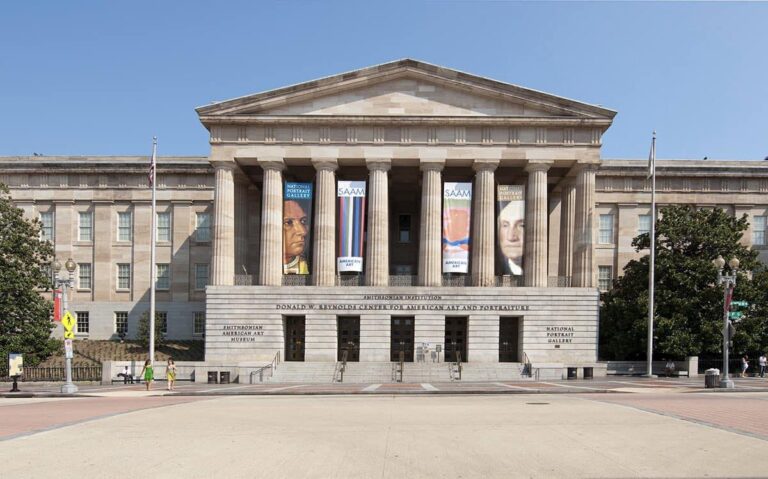
This museum tells the multifaceted story of America by portraying individuals who have shaped the nation’s history, development, and culture.
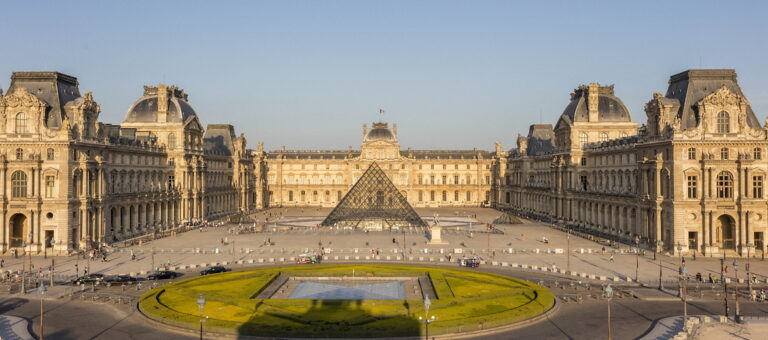
Louvre Museum with Glass Pyramid
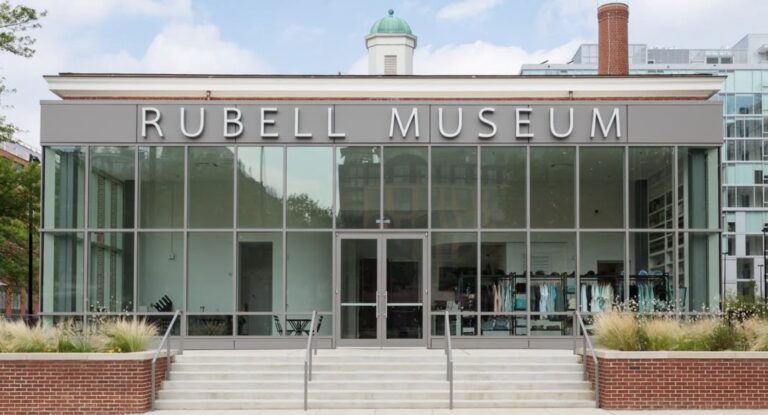
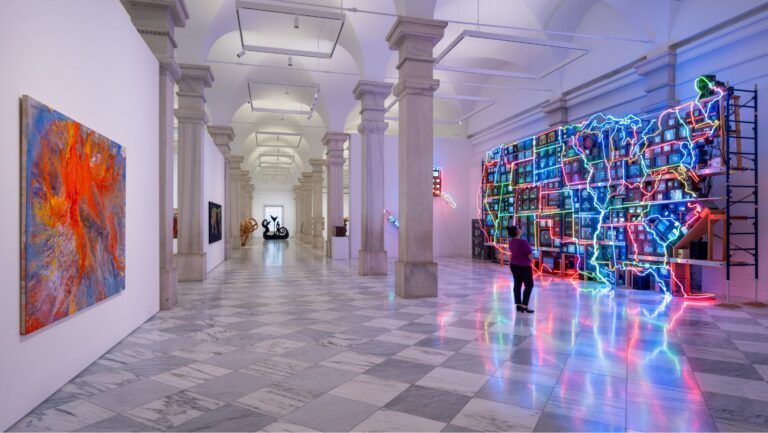
Located at 65 I Street in the Southwest neighborhood, the Rubell Museum DC brings the Rubell Family’s extensive contemporary art collection to the nation’s capital. Dedicated exclusively to contemporary art, the Rubell Museum DC reinvigorates the 1906 building of the former Randall Junior High School, a historically Black public school in Southwest DC that ceased operations in 1978. The museum, which is free for Washington DC residents, serves as a place for the public to engage with the most compelling national and international artists of our time.
Shortly after Mera and Don Rubell married in 1964, they started visiting artists’ studios and collecting art in New York. Their son, Jason Rubell, joined them in 1982 in building the collection, creating the exhibitions, and developing the museums, reflecting the multi-generational family passion for discovering, engaging, and supporting many of today’s most compelling artists. The Rubell Family Collection was established in 1993 in the Wynwood neighborhood of Miami, and in 2019 was relocated to the Allapattah neighborhood. Following the move and expansion, the institution was renamed the Rubell Museum to emphasize its public mission and expand access for audiences.
The Rubell Museum’s collection is distinguished by its unprecedented range and depth that has enabled the Museum to organize over 50 exhibitions during the last three decades drawn entirely from its holdings in painting, sculpture, photography, video, and installation. These have included such groundbreaking and diverse exhibitions as Richard Prince (2004), Against All Odds: Keith Haring (2005), Red Eye: Los Angeles Artists (2006), 30 Americans (2008) (which has since traveled to 24 museums around the country), Beg Borrow and Steal (2009), NO MAN’S LAND (2015) (which traveled to the National Museum of Women in the Arts in 2016), Purvis Young (2018), and Yayoi Kusama (2020). Many of these exhibitions have toured to museums internationally and have been accompanied by catalogues.
Make sure to stop by the museum’s coffee bar, run by independently owned, DC-based Grace Street Coffee Roasters, where visitors can enjoy espresso drinks, cold brew, tea, and select pastries.

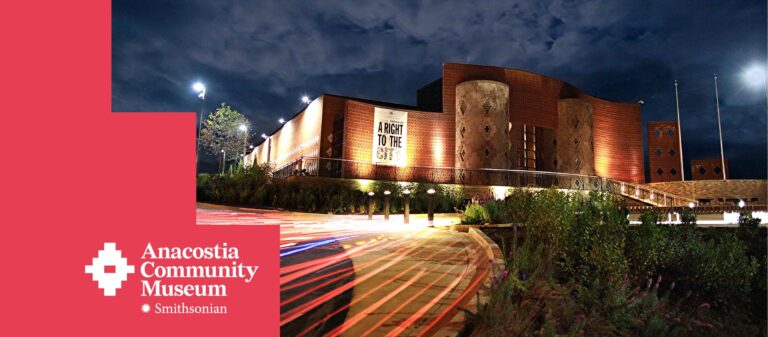
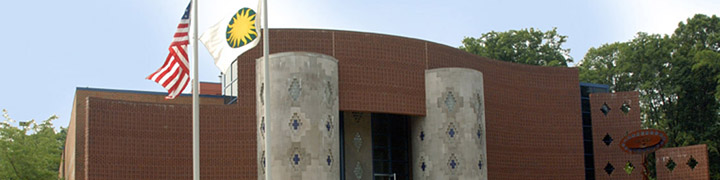
The Smithsonian’s Anacostia Community Museum (ACM) aspires to illuminate and share the untold, and often overlooked stories of people furthest from opportunity in the Greater Washington D.C. region. Our mission is to tell stories of everyday people making impactful changes, who use their collective power to tackle complex issues and advance a more equitable future for all. While local in nature, these stories are relevant to people and communities across our nation.

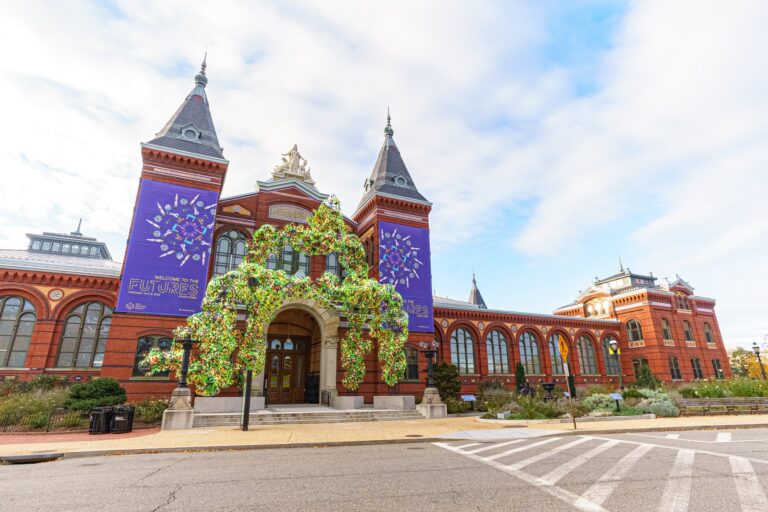
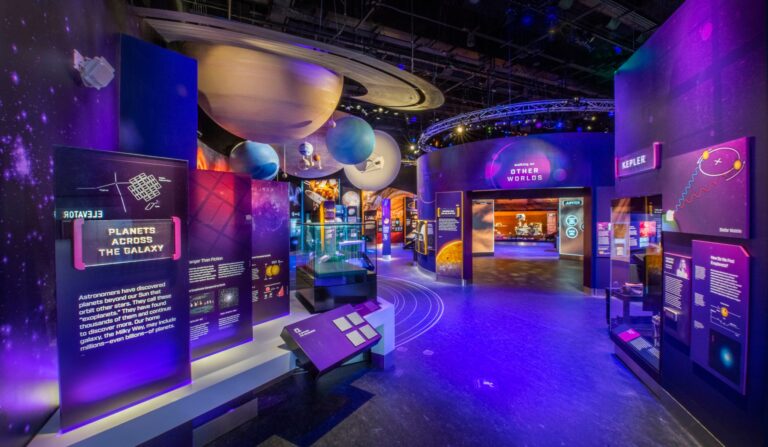
The Arts and Industries Building (AIB) is the Smithsonian’s second oldest building and a national hub for creative exchange between ideas and objects from our past and our future. AIB opened in 1881 as the country’s first U.S. National Museum, an architectural icon in the heart of the National Mall. Its soaring halls introduced millions of Americans to wonders about to change the world—Edison’s lightbulb, the first telephone, Apollo rockets. Over the years, AIB was the origin and incubator for almost every other Smithsonian museum, debuting everything from dinosaurs to rocket ships. Never fully renovated, the building closed completely in 2004 due to structural concerns before reopening in 2021 with the landmark FUTURES exhibition. The Arts & Industries Building is temporarily closed to the public.

The Smithsonian’s National Air and Space Museum maintains the world’s largest and most significant collection of aviation and space artifacts, encompassing all aspects of human flight and related works of art and archival materials. It operates two landmark facilities that welcome more than eight million visitors a year, making it the most visited museum in the country. It also is home to the Center for Earth and Planetary Studies.
One Museum, Two Locations
The Museum’s two buildings house thousands of artifacts showcased in aviation, space exploration, and planetary science exhibitions. At both locations, the Museum presents programs, educational activities, lectures, and performances that reflect the American spirit and the innovation, courage, and optimism that have led to triumphs in the history, science, and technology of flight. At the Museum in Washington, DC, which opened in 1976 and is located in the heart of the Smithsonian complex in Washington, DC, some of the most awe-inspiring icons of flight are on display. The Steven F. Udvar-Hazy Center, located near Washington Dulles International Airport in Chantilly, Virginia, is a massive structure with open, hangar-like settings that accommodate large aircraft and spacecraft and entire collections of aviation and space artifacts.
Mission: “Commemorate, Educate, Inspire”
The Smithsonian’s National Air and Space Museum collects, preserves, studies, and exhibits artifacts, archival materials, and works of art related to the history, culture, and science of aviation and spaceflight and the study of the universe. Its research and outreach activities serve all audiences within and beyond its walls. The Museum commemorates the past and is committed to educating and inspiring people to foster appreciation for the importance of flight to humanity. Vision: “Helping Build a Nation of Innovators and Explorers”
Smithsonian Libraries and Archives
A network of 21 branch libraries and institutional archives, offering vast collections in art, history, culture, science, and technology.

This archive collects and preserves documents and records related to the history of the visual arts in the United States.

The library supports the research and exhibition program of the Hirshhorn Museum and Sculpture Garden. It is the only library within Washington, DC dedicated solely to modern and contemporary art.

To support the research of the Smithsonian American Art Museum, the National Portrait Gallery, and the Archives of American Art, the AA/PG Library collection of 180,000 books, exhibition catalogs, catalogues raisonnes, serials, and dissertations is concentrated in the area of American art, history, and biography with supportive materials on European art.

The library was created in 1991 to support the research, exhibitions, and public programs of the Smithsonian’s first neighborhood museum, as well as the research needs of the Smithsonian and researchers at large.

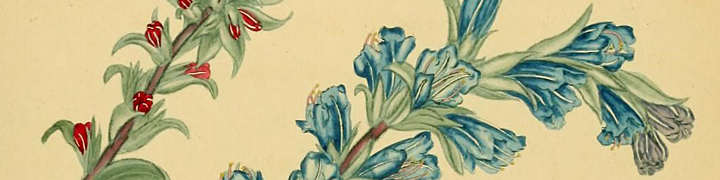
The Botany library began as a departmentally run library in the 19th century at the Smithsonian Institution. Literature is very important to the discipline of botany and in particular, taxonomy and botanical nomenclature.

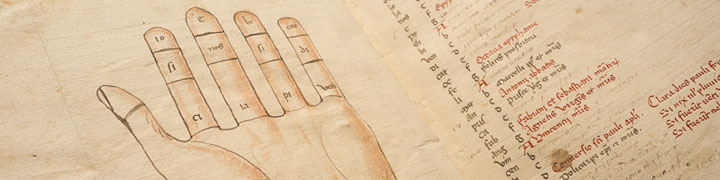
Located in the National Museum of American History, this library houses rare books and manuscripts related to the history of science and technology.

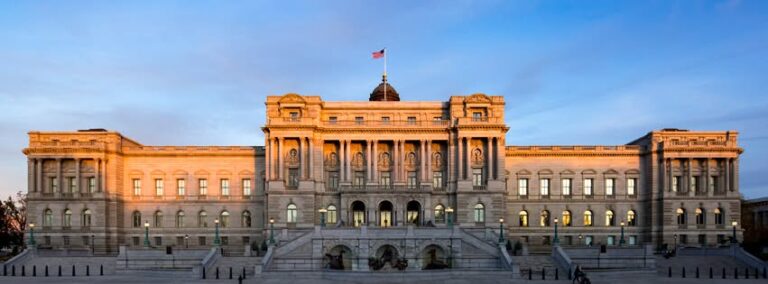
The Library of Congress is the largest library in the world, with millions of books, films and video, audio recordings, photographs, newspapers, maps and manuscripts in its collections. The Library is the main research arm of the U.S. Congress and the home of the U.S. Copyright Office.
The Library preserves and provides access to a rich, diverse, and enduring source of knowledge to inform, inspire, and engage you in your intellectual and creative endeavors. Whether you are new to the Library of Congress or an experienced researcher, our world-class staff is ready to assist you online and in person.

The Anthropology Library, officially known as the John Wesley Powell Library of Anthropology, is located within the Anthropology Department of the National Museum of Natural History.

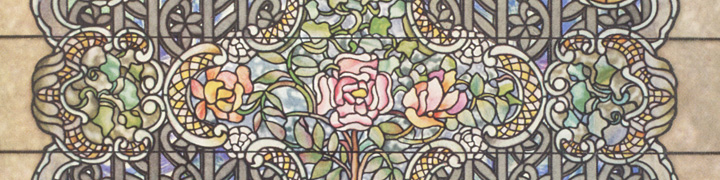
The Renwick Gallery is a branch of the Smithsonian American Art Museum located in Washington, D.C. that displays American craft and decorative arts from the 19th to 21st century.

Founded in 1894, the DC History Center deepens understanding of our city’s past to connect, empower, and inspire. As the only community-based nonprofit focused on the District’s history, our vision is to engage with neighborhoods across DC and elevate the stories of Washington’s diverse people, communities, and institutions.

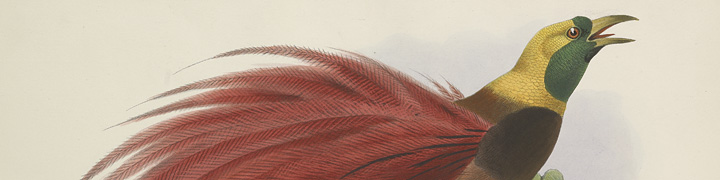
The Cullman Library holds the Smithsonian’s collection of rare books in anthropology and the natural sciences. Its world-class collection contains approximately 20,000 volumes published before 1840 in the fields of physical and cultural anthropology, ethnology, Native American linguistics, and archeology; botany; ornithology, mammalogy, herpetology, ichthyology, entomology, malacology, and other zoological fields; paleontology; and geology and mineralogy.

The National Gallery of Art, founded as a gift to the nation, serves as a center of visual art, education, and culture. Our collection of more than 150,000 paintings, sculpture, decorative arts, photographs, prints, and drawings spans the history of Western art and showcases some of the triumphs of human creativity. Across 363 days a year, the National Gallery offers a full spectrum of special exhibitions and public programs free of charge.