Eureka! The National Children’s Museum in Halifax, West Yorkshire, England, opened on July 9, 1992. Designed by architect Noel Williams, the museum is housed in a historic railway station. Eureka! is dedicated to inspiring children aged 0-11 through interactive learning experiences. Popular exhibits include the SoundSpace, where kids can experiment with music and sound, and the All About Me gallery, which explores the human body and health.

The Merseyside Maritime Museum is part of the National Museums Liverpool group in Liverpool, UK. It delves into Liverpool’s maritime history, encompassing its role in the transatlantic slave trade, emigration, naval warfare, and cultural exchanges through exhibitions and collections.

Established in 1901, located in Forest Hill. It features exhibits on anthropology, natural history, and musical instruments, along with beautiful gardens and an aquarium.

The Serpentine Sackler Gallery, located in London, UK, is an extension of the renowned Serpentine Galleries. Designed by Zaha Hadid and opened in 2013, the gallery’s renovation and expansion transformed a former gunpowder store into a modern art space. Hadid’s design integrates contemporary architectural elements with the historic structure, providing new exhibition spaces for contemporary art and architecture exhibitions.

Opened in 1920, located in Lambeth. It explores the history of modern warfare, featuring exhibits on World War I and II, the Holocaust, and contemporary conflicts.

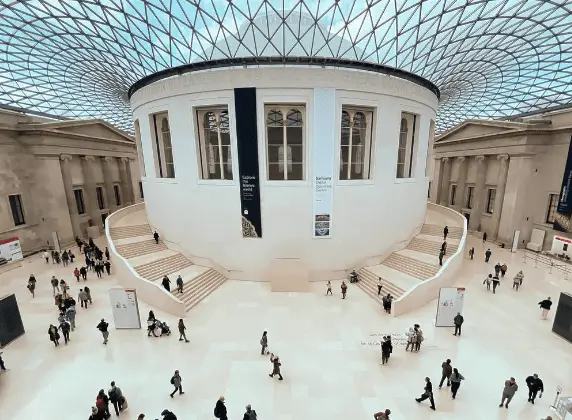
The British Museum in London, UK, was established in 1753. Its Greek Revival facade was designed by Robert Smirke. The museum’s Great Court, a modern addition by Norman Foster, features a stunning glass and steel roof. It houses a vast collection of world art and artifacts.

Opened in 2007, located in Euston. It explores the connections between medicine, life, and art, featuring exhibits on medical history, contemporary art, and interactive displays.

The Natural History Museum in London, England, opened on April 18, 1881. Designed by Alfred Waterhouse, the building is a masterpiece of Romanesque architecture, featuring ornate terracotta facades and a grand Central Hall. The museum’s collection includes approximately 80 million items, ranging from fossils and minerals to animal specimens and human artifacts. Notable exhibits include the iconic blue whale skeleton in the Hintze Hall and the Darwin Centre, which offers behind-the-scenes access to the museum’s scientific research.

Established in 1976, located in Barbican. It covers the history of London from prehistoric times to the present day, featuring artifacts, interactive displays, and a recreated Victorian street.

Established in 1768, located in Piccadilly. This art institution hosts exhibitions, events, and houses a collection of works by Royal Academicians and prominent artists.

Opened in 1837, located in Lincoln’s Inn Fields. Housed in the former home of architect Sir John Soane, it features his collection of art, antiquities, and architectural models.

Founded in 1066, located on the Thames River. This historic castle and former prison houses the Crown Jewels, medieval armory, and exhibits on its rich history.

Founded in 1932, located in Somerset House. It features an impressive collection of Impressionist and Post-Impressionist paintings, including works by Monet, Van Gogh, and Cézanne.

Established in 1914, located in Hoxton. It explores the history of English domestic interiors from the 1600s to the present day, featuring period room displays and gardens.

Opened in 1857, located in South Kensington. It showcases the history and advancements of science and technology, featuring interactive exhibits, historical artifacts, and the Apollo 10 command module.

Opened in 1856, located in St Martin’s Place. It houses a vast collection of portraits of historically important and famous British people, including paintings, photographs, and sculptures.

Situated in Greenwich, London, UK, the National Maritime Museum is housed in a building designed by architect Philip Hepworth and opened in 1937. It features exhibits on British naval history, exploration, and marine art and includes notable artifacts from significant voyages and battles.

Founded in 2004, located in Bloomsbury. It tells the story of the Foundling Hospital, the UK’s first children’s charity, featuring art collections and exhibits on the history of child welfare.