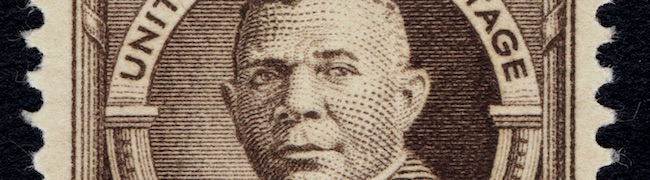
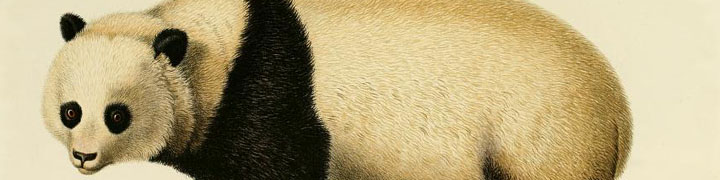
This museum tells the multifaceted story of America by portraying individuals who have shaped the nation’s history, development, and culture.

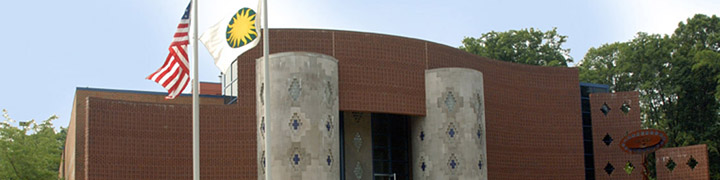
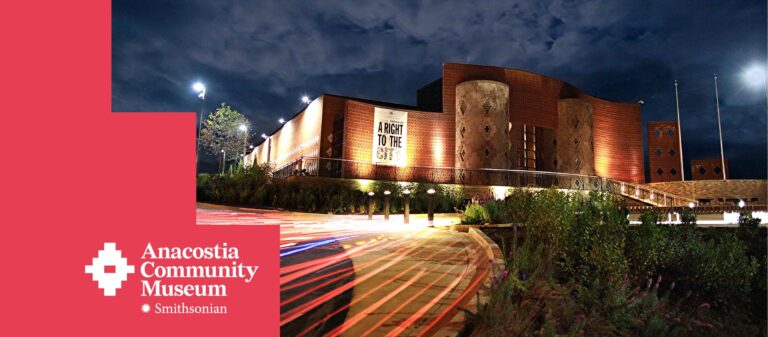
The Smithsonian’s Anacostia Community Museum (ACM) aspires to illuminate and share the untold, and often overlooked stories of people furthest from opportunity in the Greater Washington D.C. region. Our mission is to tell stories of everyday people making impactful changes, who use their collective power to tackle complex issues and advance a more equitable future for all. While local in nature, these stories are relevant to people and communities across our nation.

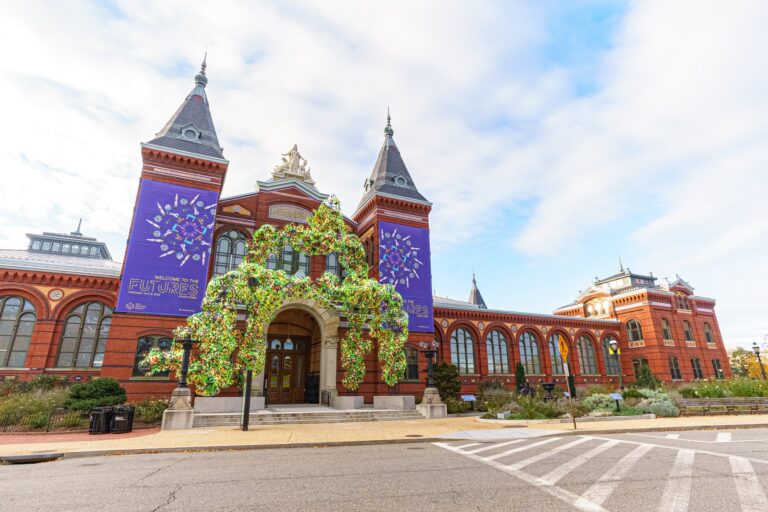
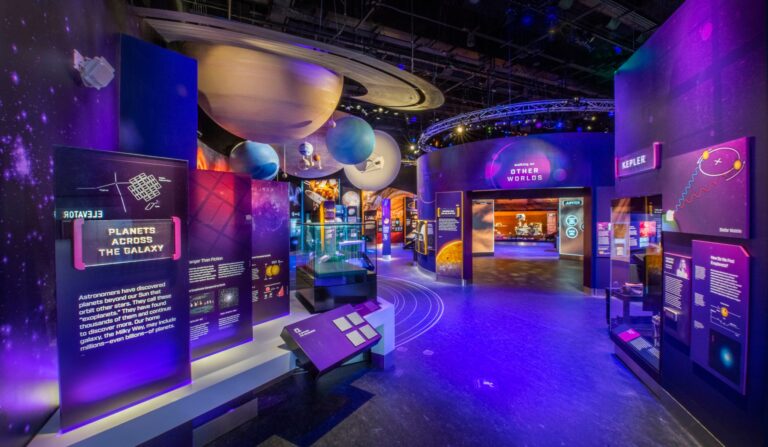
The Arts and Industries Building (AIB) is the Smithsonian’s second oldest building and a national hub for creative exchange between ideas and objects from our past and our future. AIB opened in 1881 as the country’s first U.S. National Museum, an architectural icon in the heart of the National Mall. Its soaring halls introduced millions of Americans to wonders about to change the world—Edison’s lightbulb, the first telephone, Apollo rockets. Over the years, AIB was the origin and incubator for almost every other Smithsonian museum, debuting everything from dinosaurs to rocket ships. Never fully renovated, the building closed completely in 2004 due to structural concerns before reopening in 2021 with the landmark FUTURES exhibition. The Arts & Industries Building is temporarily closed to the public.

The Smithsonian’s National Air and Space Museum maintains the world’s largest and most significant collection of aviation and space artifacts, encompassing all aspects of human flight and related works of art and archival materials. It operates two landmark facilities that welcome more than eight million visitors a year, making it the most visited museum in the country. It also is home to the Center for Earth and Planetary Studies.
One Museum, Two Locations
The Museum’s two buildings house thousands of artifacts showcased in aviation, space exploration, and planetary science exhibitions. At both locations, the Museum presents programs, educational activities, lectures, and performances that reflect the American spirit and the innovation, courage, and optimism that have led to triumphs in the history, science, and technology of flight. At the Museum in Washington, DC, which opened in 1976 and is located in the heart of the Smithsonian complex in Washington, DC, some of the most awe-inspiring icons of flight are on display. The Steven F. Udvar-Hazy Center, located near Washington Dulles International Airport in Chantilly, Virginia, is a massive structure with open, hangar-like settings that accommodate large aircraft and spacecraft and entire collections of aviation and space artifacts.
Mission: “Commemorate, Educate, Inspire”
The Smithsonian’s National Air and Space Museum collects, preserves, studies, and exhibits artifacts, archival materials, and works of art related to the history, culture, and science of aviation and spaceflight and the study of the universe. Its research and outreach activities serve all audiences within and beyond its walls. The Museum commemorates the past and is committed to educating and inspiring people to foster appreciation for the importance of flight to humanity. Vision: “Helping Build a Nation of Innovators and Explorers”
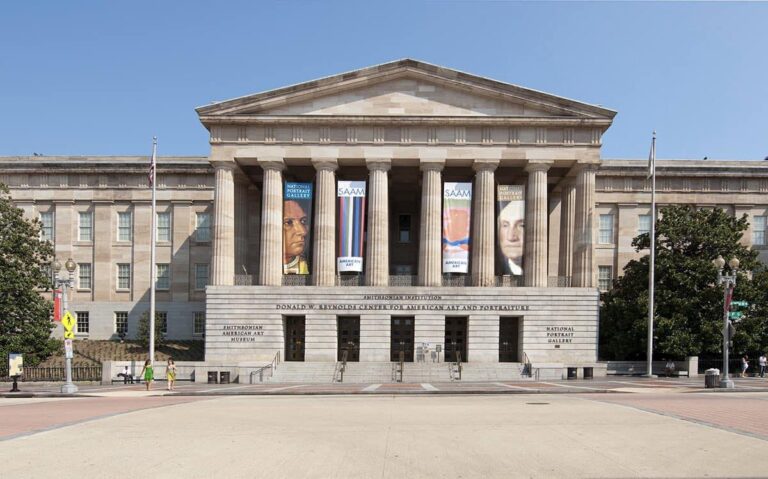
The library supports the research and exhibition program of the Hirshhorn Museum and Sculpture Garden. It is the only library within Washington, DC dedicated solely to modern and contemporary art.

To support the research of the Smithsonian American Art Museum, the National Portrait Gallery, and the Archives of American Art, the AA/PG Library collection of 180,000 books, exhibition catalogs, catalogues raisonnes, serials, and dissertations is concentrated in the area of American art, history, and biography with supportive materials on European art.

The library was created in 1991 to support the research, exhibitions, and public programs of the Smithsonian’s first neighborhood museum, as well as the research needs of the Smithsonian and researchers at large.

The Botany library began as a departmentally run library in the 19th century at the Smithsonian Institution. Literature is very important to the discipline of botany and in particular, taxonomy and botanical nomenclature.

Located in the National Museum of American History, this library houses rare books and manuscripts related to the history of science and technology.

The Anthropology Library, officially known as the John Wesley Powell Library of Anthropology, is located within the Anthropology Department of the National Museum of Natural History.

The Cullman Library holds the Smithsonian’s collection of rare books in anthropology and the natural sciences. Its world-class collection contains approximately 20,000 volumes published before 1840 in the fields of physical and cultural anthropology, ethnology, Native American linguistics, and archeology; botany; ornithology, mammalogy, herpetology, ichthyology, entomology, malacology, and other zoological fields; paleontology; and geology and mineralogy.

The library is devoted to collecting and providing access to resources that support scholarship in African American history, culture, and the African Diaspora. The Library also supports research in genealogy and family history.

As a premier American history collection and one of 21 libraries in the Smithsonian library system, the library supports research in the following areas: all areas of American history, including social, cultural, political, and economic events and development, along with their impact on everyday American life; advances in technology, including machinery and transportation; and scientific and medical history.

xThe National Museum of Asian Art Library originated as a collection of four thousand monographs, periodical issues, offprints, and sales catalogues that art collector Charles Lang Freer donated to the Smithsonian Institution as part of his gift to the nation.

The National Museum of Natural History (NMNH) Library consists of the main location (on the 1st floor and basement of the NMNH’s East Court) and 11 specialized collections throughout the NMNH building. These collections are in the NMNH Entomology, Invertebrate Zoology, Vertebrate Zoology, Mineral Sciences, and Paleobiology departments. The NMNH Main Library and its satellite locations all have strong collections of 19th- and 20th-century literature (thanks in part to the gifts of early Smithsonian curators). Pre-1840 titles are accessible in the Joseph F. Cullman 3rd Library of Natural History, part of the Special Collections Department, SIL.

Your philatelic adventure starts here. The Smithsonian’s National Postal Museum houses one of the largest and most significant philatelic and postal history collections in the world and one of the world’s most comprehensive library resources on philately and postal history. The Library has one of the world’s largest and most accessible collections of philatelic literature. The National Postal Museum is dedicated to the preservation, study and presentation of postal history and philately through stamps and objects. The Library supports the museum’s mission: Through the preservation and interpretation of our postal and philatelic collections, the Smithsonian National Postal Museum educates, challenges, and inspires its audiences on the breadth of American experiences.

The evolution of the Libraries’ outreach at the Smithsonian’s National Zoological Park (NZP) and Conservation Biology Institute (SCBI) reflects how profoundly American zoos have changed in the last 50 years. What used to be called wildlife management is now conservation biology, and the traditional study of animals based on physical characteristics has evolved into an investigation based on genetic distinctiveness. As the care and study of wild animals become increasingly sophisticated, the Libraries’ expanding collections and evolving services are more critically needed than ever before.

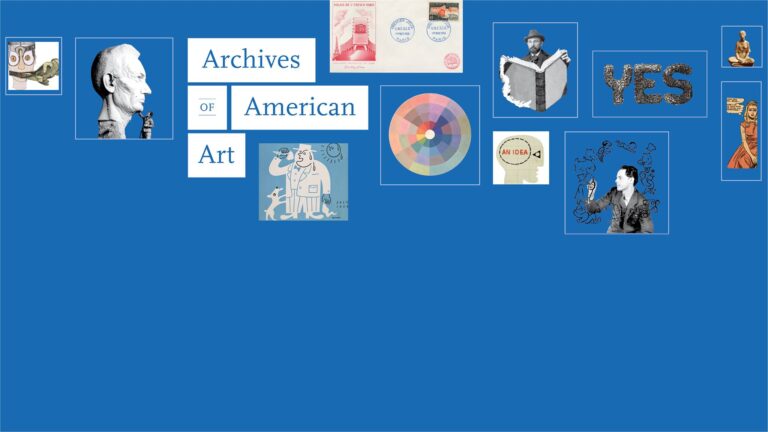
This archive collects and preserves documents and records related to the history of the visual arts in the United States.
Loading...
No Records Found
Sorry, no records were found. Please adjust your search criteria and try again.
Maps failed to load
Sorry, unable to load the Maps API.